
Key Points
There’s something particularly annoying about spending an afternoon cleaning the bathroom, only to find white mineral deposits returning before the week is over. Your glasses look cloudy, your showerhead needs another scrub, and your freshly washed towels don’t feel quite as soft as you’d hoped. For many homeowners, these frustrations are simply part of living…
There’s something particularly annoying about spending an afternoon cleaning the bathroom, only to find white mineral deposits returning before the week is over. Your glasses look cloudy, your showerhead needs another scrub, and your freshly washed towels don’t feel quite as soft as you’d hoped.
For many homeowners, these frustrations are simply part of living with hard water. But accepting them as normal doesn’t mean you have to put up with them forever.
Water softening offers a practical way to address excessive mineral content while helping protect household appliances and plumbing. The important thing is finding equipment that suits your home, rather than buying the first system that promises impressive results.
Related reading: Experience Advanced Drinking Water Filtration With the Kinetico K5 Drinking Water StationKeeping Mineral Deposits Under Control: A Smarter Approach to Hard Water in Aledo, TexasProtecting Your Home and Appliances Starts With Understanding Your WaterWhy Hard Water Causes So Much Trouble
Hard water develops naturally when water travels through soil and rock formations, collecting dissolved calcium and magnesium along the way. These minerals aren’t generally harmful to health, but they can certainly make household maintenance more demanding.
When water evaporates, mineral deposits remain behind. Heating hard water can also encourage scale formation, which explains why kettles and water heaters frequently develop mineral buildup.
Modern water softener systems are designed to address this issue by reducing the concentration of hardness minerals before water reaches connected household fixtures and appliances.
Unlike cleaning products that temporarily remove visible deposits, softening tackles the underlying cause. It won’t instantly eliminate years of existing scale, but it can help prevent excessive new buildup.
Related reading: Better Drinking Water Starts With the Right Treatment SystemBetter Water Begins With Understanding What Your Home Really NeedsFor anyone who’s tired of repeatedly scrubbing the same bathroom surfaces, that’s a welcome improvement.
The Everyday Inconveniences You Might Have Overlooked
Hard water affects more than the appearance of your kitchen and bathroom.
Have you ever noticed that soap doesn’t lather particularly well, regardless of how much you use? Hardness minerals can react with traditional soap, reducing its effectiveness and leaving residue behind.
Laundry may also feel rougher than expected, while dishes sometimes develop cloudy spots after drying.
Homeowners looking to reduce hard water problems often discover that addressing mineral content makes several ordinary household tasks easier.
There may be less frequent descaling, fewer stubborn deposits, and improved soap performance. These changes aren’t necessarily dramatic, but their value becomes clearer when you experience them day after day.
And really, who wouldn’t appreciate spending a little less time cleaning?
How Water Softening Technology Actually Works
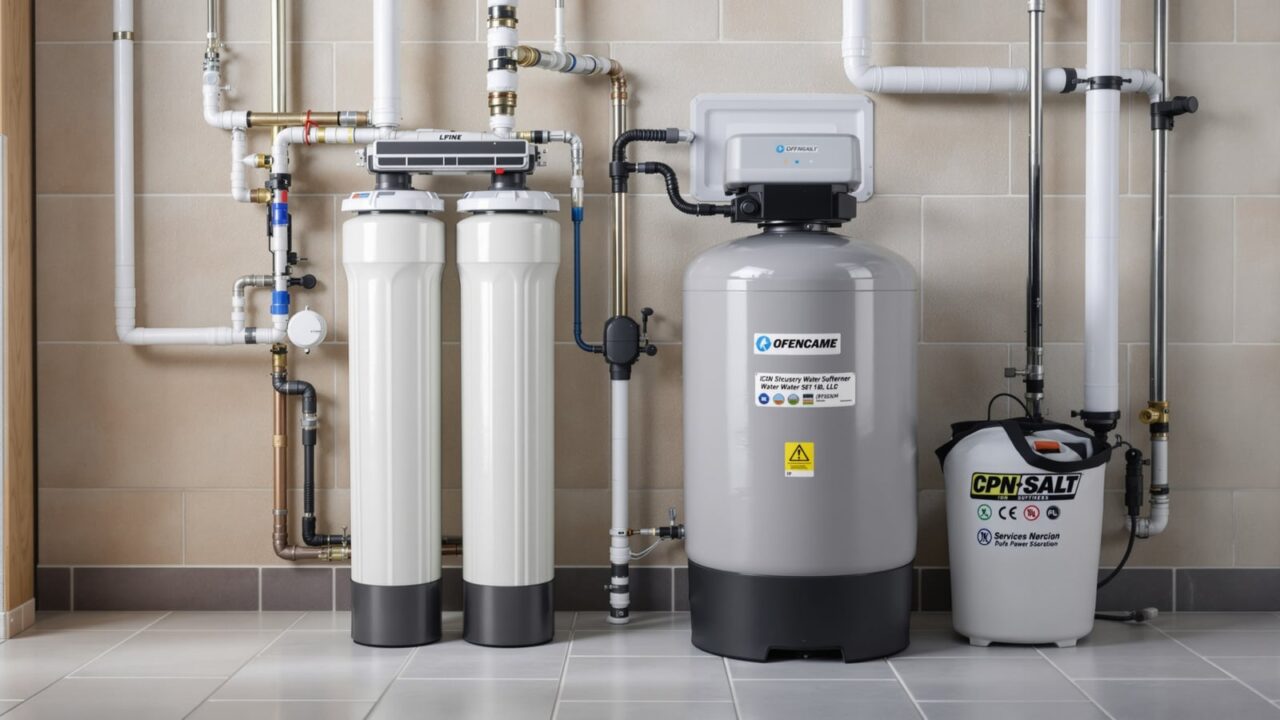
Most conventional water softeners operate using a process known as ion exchange. Although the name sounds technical, the basic principle is relatively simple.
Inside the softener is a tank containing specialized resin beads. As hard water passes through this resin, calcium and magnesium ions are exchanged for sodium or potassium ions.
Eventually, the resin reaches its treatment capacity and needs regeneration. This typically involves flushing it with a salt solution to restore its ability to soften water.
Some modern units monitor household consumption and regenerate according to demand rather than following a fixed schedule. Depending on usage patterns, this can help limit unnecessary salt and water consumption.
Understanding how equipment operates makes it easier to compare maintenance requirements and long-term expenses.
Getting the Size Right Matters More Than You Think
Buying the largest available water softener isn’t necessarily a smart decision. Neither is choosing the smallest unit simply because it costs less.
Every household has different water consumption habits. A couple living alone might use considerably less water than a family with several children, multiple bathrooms, and frequent laundry loads.
Installing properly sized water softener systems helps ensure that treatment capacity matches household demand and incoming water hardness.
An undersized system may regenerate too frequently or struggle to provide consistently softened water. An oversized unit, meanwhile, may involve unnecessary upfront expenses.
Water hardness measurements, daily consumption, and peak flow requirements should all influence equipment selection.
A professional assessment can help determine the appropriate capacity without relying on guesswork.
Helping Your Appliances Last Longer
Household appliances aren’t cheap, and unexpected repairs rarely arrive at a convenient time.
Hard water scale can gradually accumulate inside equipment that regularly heats or circulates water. Water heaters are particularly susceptible because mineral deposits may interfere with heat transfer when buildup becomes substantial.
Dishwashers and washing machines can experience mineral-related maintenance issues as well.
Reducing water hardness may help limit these deposits and support equipment performance over time.
Of course, installing a softener doesn’t guarantee that your appliances will never need repairs. Normal mechanical wear is unavoidable. Still, addressing excessive mineral buildup is a sensible way to protect equipment you’ve already invested in.
Understanding the Difference Between Softening and Filtration
It’s easy to confuse water softeners with water filters, especially when shopping for household treatment equipment.
A conventional softener primarily reduces calcium and magnesium. It isn’t designed to remove every potentially harmful contaminant or eliminate chlorine-related tastes and odors.
Carbon filtration, sediment removal, and reverse osmosis each serve different purposes.
Some households may benefit from combining softening with additional filtration, while others might only require hardness reduction.
Reliable water testing helps determine which approach makes sense. There’s little reason to purchase extra equipment unless it addresses a genuine concern.
Keeping Your Water Softener Working Reliably
Water softeners require occasional maintenance, but the routine is generally manageable.
Checking salt levels, following manufacturer recommendations, and arranging periodic servicing can help maintain effective performance.
If mineral stains unexpectedly return, consider testing your water again. The equipment may require adjustment or maintenance.
A More Comfortable Home Starts With Better Water
Improving household water quality doesn’t have to involve expensive renovations or complicated technology.
With suitable equipment, reliable testing, and consistent maintenance, homeowners can address many of the inconveniences associated with excessive water hardness.
Fewer mineral deposits, easier cleaning, and better-protected appliances may not sound like particularly exciting improvements. But when they make everyday life more comfortable, their value is difficult to overlook.
Related Posts
Same section · next recordsHOM-0800 · 25 Nov 2026 · Home services
Experience Advanced Drinking Water Filtration With the Kinetico K5 Drinking Water Station
A refreshing glass of water shouldn’t come with an unpleasant aftertaste or lingering concerns…
HOM-0797 · 25 Nov 2026 · Home services
Keeping Mineral Deposits Under Control: A Smarter Approach to Hard Water in Aledo, Texas
You wipe down the kitchen faucet, scrub the bathroom tiles, and clean the showerhead.…
HOM-0794 · 25 Nov 2026 · Home services
Protecting Your Home and Appliances Starts With Understanding Your Water
Water is one of those things we rarely think about until it starts causing…