
Key Points
You wipe down the kitchen faucet, scrub the bathroom tiles, and clean the showerhead. Everything looks great for a few days. Then, almost predictably, those stubborn white deposits start appearing again. For many homeowners in Aledo, Texas, dealing with hard water can feel like a never-ending cycle of cleaning and maintenance. Fortunately, investing in water…
You wipe down the kitchen faucet, scrub the bathroom tiles, and clean the showerhead. Everything looks great for a few days. Then, almost predictably, those stubborn white deposits start appearing again. For many homeowners in Aledo, Texas, dealing with hard water can feel like a never-ending cycle of cleaning and maintenance.
Fortunately, investing in water softening for scale buildup offers a practical way to reduce the minerals responsible for these recurring household frustrations.
Rather than continually removing deposits after they form, softening addresses excessive hardness before water travels through your plumbing. It’s a relatively simple concept, but one that can make a noticeable difference in how you care for your home.
Related reading: Living With Hard Water? Here’s How the Right Water Softener Can Make a DifferenceExperience Advanced Drinking Water Filtration With the Kinetico K5 Drinking Water StationProtecting Your Home and Appliances Starts With Understanding Your WaterWhat Causes Mineral Deposits in the First Place?
Water naturally picks up minerals while moving through underground rock and soil formations. Calcium and magnesium are primarily responsible for hardness.
When water evaporates, these dissolved minerals may remain behind, creating the chalky residue commonly found around faucets and bathroom fixtures.
Heat can encourage scale formation, too. That’s why kettles and water heaters often experience mineral accumulation.
Although hardness minerals aren’t generally harmful at typical drinking water concentrations, their effects throughout the home can become inconvenient.
Related reading: Better Drinking Water Starts With the Right Treatment SystemBetter Water Begins With Understanding What Your Home Really NeedsThe deposits you see around your kitchen sink are only part of the picture. Scale may also accumulate inside equipment where it isn’t immediately visible.
Understanding this process makes it easier to appreciate why prevention is often more practical than repeated cleaning.
Addressing Hard Water Before It Becomes a Bigger Problem
Many homeowners rely on descaling products, vinegar, and specialized cleaning supplies to manage mineral deposits. These methods can be useful, but they don’t change the incoming water supply.
Effective residential hard water treatment focuses on reducing excessive hardness before it contributes to additional scale formation.
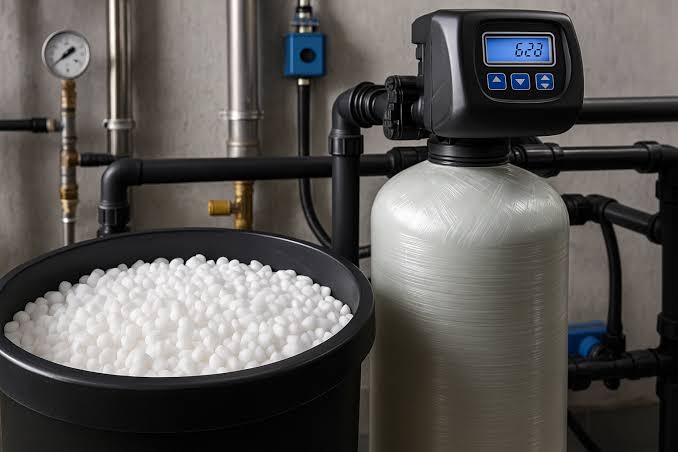
Conventional water softeners use an ion-exchange process that replaces dissolved calcium and magnesium ions with sodium or, in compatible systems, potassium ions.
The treatment resin periodically regenerates to restore its softening capacity.
With appropriately selected equipment, homeowners may experience improved soap lathering, fewer new mineral deposits, and easier household cleaning.
It’s a more proactive approach than constantly dealing with the consequences of untreated hard water.
Finding a Softener That Suits Your Aledo Home
Not every household has identical water requirements. A busy family with multiple bathrooms and frequent laundry loads will have different needs from someone living alone.
When comparing softener systems for mineral deposits, consider measured hardness levels, household consumption, equipment capacity, and regeneration requirements.
Demand-initiated systems generally regenerate according to water usage and programmed settings. This can help manage salt and water consumption when the equipment is properly configured.
Installation space deserves consideration as well. You’ll need convenient access to replenish salt and perform routine maintenance.
Before making a decision, discuss your expectations with a treatment professional. The right system should address your specific concerns without introducing unnecessary expenses or additional household complications.
Giving Your Water Heater and Appliances Extra Protection
Most people don’t give their water heater much thought until it stops working. And when that happens, replacing it can be an unwelcome expense.
Mineral scale may gradually accumulate inside water-heating equipment, potentially interfering with efficient heat transfer.
Dishwashers, washing machines, and smaller appliances can also experience hardness-related maintenance concerns.
Appropriate softening helps limit the formation of new scale deposits. While it won’t automatically repair existing damage, it can support a sensible preventive maintenance routine.
If you’ve recently purchased new appliances or renovated your kitchen, addressing excessive hardness may be particularly worthwhile.
After all, protecting the equipment you already own often makes more financial sense than dealing with premature repairs or replacements.
The Little Everyday Benefits of Softer Water
Some of the most enjoyable improvements associated with softer water appear during ordinary household activities.
Soap may produce a better lather, towels might feel less stiff, and bathroom fixtures may become easier to clean.
You could also find yourself using less detergent by following product recommendations for softened water.
Then there’s the satisfaction of looking at a recently cleaned shower door without immediately noticing another layer of chalky residue.
Of course, individual experiences vary depending on water conditions, cleaning products, and treatment performance.
Still, reducing those repetitive little frustrations can make a busy household feel considerably more manageable.
Sometimes, saving a little effort every day matters more than making one dramatic improvement.
Why Testing and Regular Maintenance Are Worthwhile
Before investing in softening equipment, arrange a reliable water hardness assessment. Accurate measurements help determine appropriate system capacity and regeneration settings.
When consulting a provider such as Elders Water, ask about installation requirements, salt consumption, maintenance schedules, and ongoing operating expenses.
Once your system is installed, check salt levels periodically and follow manufacturer recommendations for servicing.
Unexpected changes in hardness or the return of stubborn mineral deposits may indicate that the equipment requires attention.
Remember that softening doesn’t provide comprehensive drinking water purification. Additional treatment may be necessary if testing identifies other water quality concerns.
Making Hard Water Problems a Thing of the Past
For homeowners in Aledo, Texas, managing mineral buildup doesn’t have to mean purchasing stronger cleaning products or spending every weekend scrubbing bathroom fixtures.
With reliable testing, appropriately sized equipment, and consistent maintenance, excessive hardness can be addressed more effectively.
The benefits often become noticeable gradually — cleaner-looking fixtures, more comfortable laundry routines, and fewer new mineral deposits.
Your home should be a place where you can relax rather than constantly worry about maintenance.
Investing in better water quality is one of those practical decisions that quietly supports everyday living. And when it means spending less time cleaning and more time enjoying your home, that’s certainly an improvement worth considering.
Related Posts
Same section · next recordsHOM-0803 · 25 Nov 2026 · Home services
Living With Hard Water? Here’s How the Right Water Softener Can Make a Difference
There’s something particularly annoying about spending an afternoon cleaning the bathroom, only to find…
HOM-0800 · 25 Nov 2026 · Home services
Experience Advanced Drinking Water Filtration With the Kinetico K5 Drinking Water Station
A refreshing glass of water shouldn’t come with an unpleasant aftertaste or lingering concerns…
HOM-0794 · 25 Nov 2026 · Home services
Protecting Your Home and Appliances Starts With Understanding Your Water
Water is one of those things we rarely think about until it starts causing…