The Hidden Craft Behind Bone Surgery
There’s something uniquely fascinating about orthopedic surgery. Unlike many other medical fields that deal with soft tissues and organs, this branch of medicine works directly with the body’s structural framework — bones, joints, and the complex system that keeps us moving every single day.
It’s not just delicate work; it’s also physically demanding. Surgeons must balance strength with precision, applying controlled force while maintaining incredible accuracy. And that balance wouldn’t be possible without the tools specifically designed for this kind of work.
Behind every successful joint replacement, fracture repair, or spinal procedure lies a carefully selected set of instruments, each built to handle the unique challenges of bone surgery.
Tools Designed for Strength and Control
Orthopedic procedures often require instruments that can withstand significant physical stress while still allowing surgeons to operate with fine control. These aren’t ordinary medical tools — they’re engineered to interact with one of the toughest materials in the human body.
This is where orthopedic instruments play their critical role.
Unlike general surgical tools, orthopedic instruments are designed for durability. They must handle pressure, impact, and repeated use without losing precision. At the same time, they need to provide ergonomic support so surgeons can maintain steady control during long procedures.
Take something like a surgical drill used in joint replacement. It needs to cut through dense bone tissue while minimizing vibration and preventing accidental damage to surrounding areas. Even the weight and balance of such tools are carefully calculated to reduce fatigue.
It’s a fascinating intersection of engineering and medicine — tools that must be as strong as they are precise.
Shaping Bone with Precision
One of the less obvious but incredibly important aspects of orthopedic surgery is shaping bone surfaces to ensure proper alignment and function.
This is where bone rasps come into the picture.
Bone rasps are specialized instruments designed to smooth and contour bone surfaces. They work somewhat like files used in woodworking, gradually removing small amounts of material to achieve the desired shape.
In procedures like joint replacements, this shaping process is crucial. The bone must fit perfectly with implants to ensure stability, reduce wear, and support long-term mobility.
What’s remarkable about bone rasps is the level of control they offer. Surgeons rely on tactile feedback — feeling the resistance of bone as they work — to guide their movements. This sensory input allows for adjustments in real time, ensuring precision at every step.
It’s a reminder that even in modern medicine, human touch remains an essential component of surgical success.
Cutting Through Strength with Care
While shaping tools play an important role, there are also moments in orthopedic surgery when controlled cutting becomes necessary. Removing damaged bone fragments or preparing areas for implants requires tools designed specifically for that purpose.
That’s where bone cutters become indispensable.
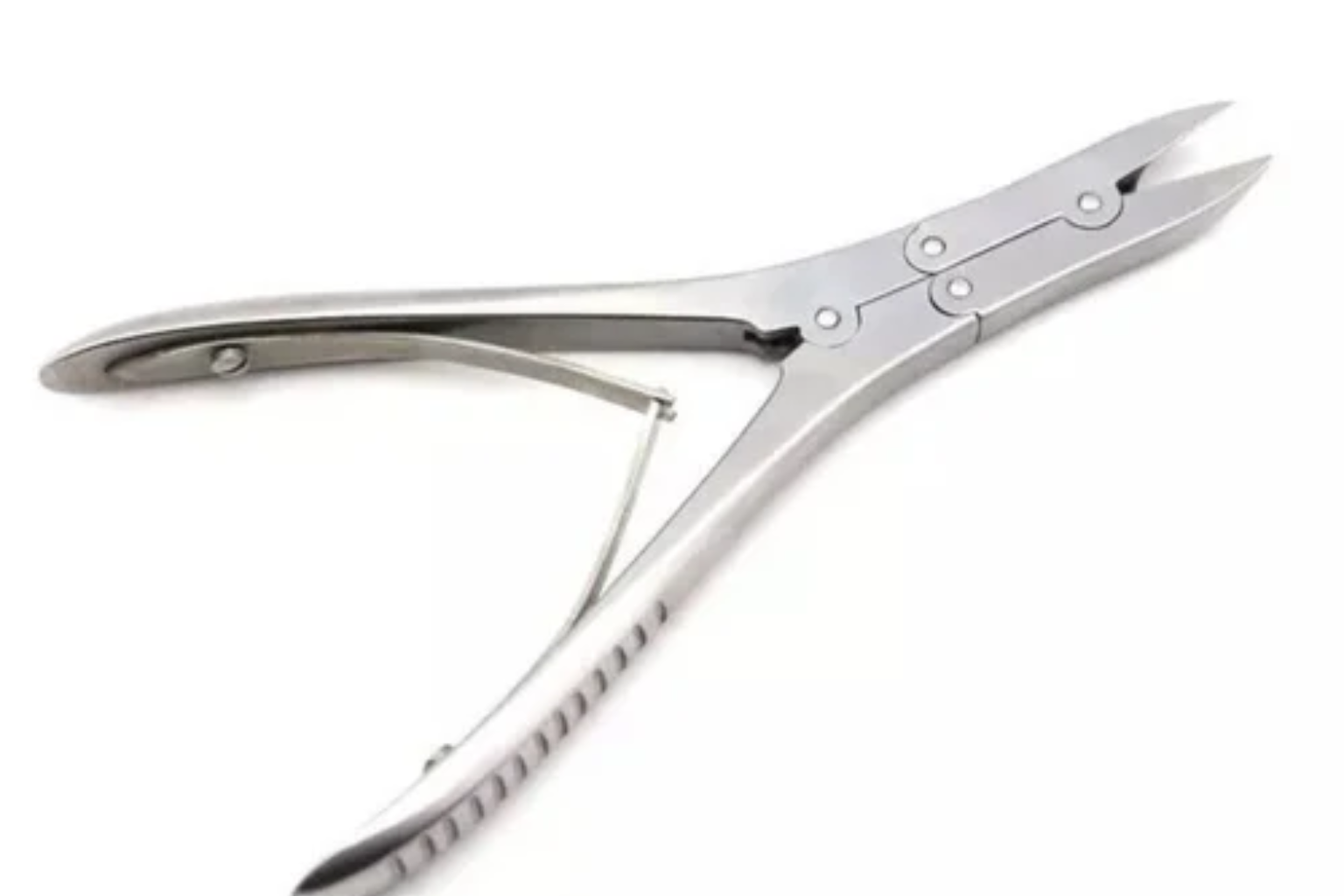
These instruments are engineered to deliver clean, controlled cuts through dense bone tissue. Their design allows surgeons to apply significant force while maintaining accuracy and minimizing trauma to surrounding structures.
The importance of clean cuts cannot be overstated. Smooth bone edges promote better healing, reduce the risk of complications, and improve overall surgical outcomes.
Bone cutters also highlight an interesting balance in surgical tool design — combining power with finesse. They must be strong enough to perform demanding tasks while still allowing surgeons to maintain delicate control.
The Human Relationship with Surgical Tools
It’s easy to think of surgical instruments as purely mechanical objects, but for surgeons, they often feel much more personal.
Over years of practice, orthopedic specialists develop a deep familiarity with their tools. They know exactly how an instrument should feel in their hands, how it responds under pressure, and how much force to apply in different situations.
This relationship is built on trust. During complex procedures, surgeons rely heavily on the consistency and reliability of their instruments. Any uncertainty can disrupt workflow and increase risks.
There’s also a collaborative element behind every tool. Engineers design them, manufacturers produce them, and technicians maintain them through rigorous sterilization and inspection processes.
All of this effort supports the surgeon’s ability to perform safely and effectively.
The Evolution of Orthopedic Instrumentation
Orthopedic tools have evolved significantly over the years. Modern designs focus not only on performance but also on ergonomics and patient outcomes.
Advanced materials like titanium alloys and specialized coatings have made instruments lighter, stronger, and more resistant to corrosion. Improved grip designs help reduce hand fatigue during lengthy procedures.
Technology is also beginning to influence orthopedic tools. Some instruments now integrate digital guidance systems, allowing surgeons to achieve greater accuracy during implant placement.
These innovations reflect a broader shift toward precision-driven healthcare.
Why Traditional Tools Still Matter
Despite technological advancements, many traditional orthopedic instruments remain essential.
Manual tools provide something that machines cannot fully replicate — direct tactile feedback. Surgeons can feel subtle differences in bone density, adjust their technique instantly, and respond to unexpected challenges during surgery.
This sensory connection between surgeon and tool is invaluable. It allows for adaptability, which is often critical in complex procedures.
Even in an age of robotics and automation, the importance of manual instruments remains unchanged.
Looking Toward the Future
The future of orthopedic instrumentation is likely to combine traditional craftsmanship with advanced technology.
Researchers are exploring tools that incorporate smart sensors to monitor pressure levels during surgery. Custom-designed instruments created through 3D printing may allow for personalized surgical solutions tailored to individual patients.
These developments aim to enhance precision, reduce recovery times, and improve long-term outcomes.
Yet despite these changes, the fundamental purpose of orthopedic tools remains the same — supporting surgeons in restoring mobility and improving quality of life.
A Quiet Role in Life-Changing Outcomes
For patients, orthopedic surgery often represents a turning point — the moment when pain is relieved, movement is restored, and independence returns.
Behind that transformation lies a carefully coordinated system of expertise, technology, and tools working together.
Orthopedic instruments may not receive recognition, but their impact is profound. They enable precision, support strength, and help turn surgical skill into life-changing results.